I am very pleased to share our latest article, published in People and Nature and led by Francéline Rasoanirina as part of her Master’s research at the Institut Halieutique et des Sciences Marines (IH.SM) and IRD’s international joint laboratory MIKAROKA.
- Journal — People and Nature
- Lead author — Francéline Rasoanirina (IH.SM / IRD LMI MIKAROKA)
- Study site — Ranobe Bay, southwestern Madagascar
- Funding — IRD LMI MIKAROKA · University of Montpellier (KIM Sea & Coast, project FISHTAIL)
The practice
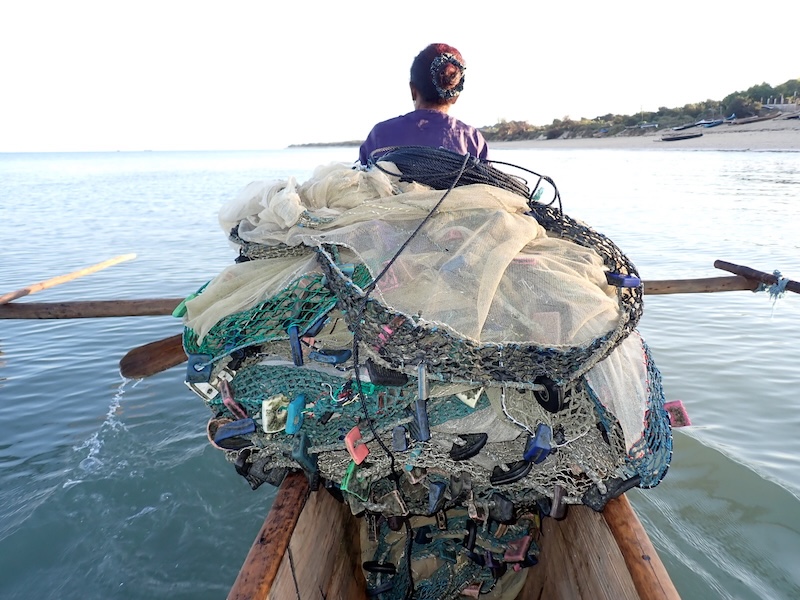
Mosquito net fishing is a widespread yet overlooked practice across tropical coastal regions. Although frequently illegal, it persists because it provides immediate benefits to vulnerable households. Its broader impacts remain poorly understood, as few studies have examined its social, economic, and environmental dimensions together.
What we did
We investigated mosquito net fishing in Ranobe Bay, combining:
- Interviews with fishers
- Observations of fishing practices
- Catch and value-chain surveys
Key findings
Our results highlight a difficult trade-off: the practice helps meet immediate food and income needs, but may also contribute to long-term ecological degradation and persistent poverty — what is often described as a socio-ecological trap. The study also underscores the central role of women in fishing, processing, and marketing activities, and their contribution to household livelihoods.
Implications
Addressing mosquito net fishing requires integrated solutions that support vulnerable livelihoods, recognize gender roles, and promote sustainable, inclusive fisheries management. This work owes a great deal to Francéline Rasoanirina’s outstanding field engagement and leadership throughout the project.
FISHTAIL project page · Read the article Plain language summary IRD Press release (in french)